
Hey chess enthusiasts! Whether you’re following the FIDE World Cup or just honing your skills, welcome back to the blog on Summit School of Chess.
As the sun sets over the Arabian Sea in beautiful Goa, India, the 2025 FIDE World Cup is heating up like a spicy vindaloo – full of surprises, heartbreaks, and brilliant moments that remind us why knockout chess is the most exhilarating format in our game. With the tournament running from late October through November 27, we’re now deep into the business end, and let me tell you, this edition has been an absolute rollercoaster.
Over 200 players started the journey, battling for a massive $2 million prize fund and, more importantly, three golden tickets to the 2026 Candidates Tournament. As of November 20 – a well-deserved rest day – we’ve just wrapped up the quarterfinal tiebreaks, and the semifinals are set to ignite tomorrow.
For those new to the World Cup frenzy, this is FIDE’s biennial single-elimination beast: 206 players (open section, with a parallel women’s event), seeded mostly by rating, clashing in mini-matches of two classical games (90 minutes + 30-second increment), followed by rapid and blitz tiebreaks if needed, down to Armageddon if it gets that wild. It’s unforgiving – one bad day, and you’re on a flight home.
This year, hosted at the luxurious Resort Rio in Goa, the event has blended top-level chess with Indian hospitality, cultural opening ceremonies, and even some beach vibes for the players between rounds. But make no mistake: on the board, it’s been brutal.
The Biggest Shock: Gukesh Eliminated Early
The biggest headline? Reigning World Champion D. Gukesh, the top seed and hometown hero after his epic 2024 triumph over Ding Liren, crashed out shockingly early in Round 3.
Yes, you read that right – the youngest world champ in history was eliminated by German GM Frederik Svane!
Gukesh, still adjusting to the champion’s spotlight at just 19, fell in tiebreaks after splitting the classical games. Svane, rated over 100 points lower, played fearlessly and capitalized on some uncharacteristic errors. It was a stark reminder that in knockouts, form, nerves, and luck trump ratings every time.
India had high hopes with Gukesh, Arjun Erigaisi, Praggnanandhaa, and others, but this early exit stung.
Chaos, Upsets, and New Stars
That upset opened the floodgates. By the Round of 16, only a handful of top seeds remained. Favorites like Vincent Keymer, Anish Giri, Nodirbek Abdusattorov, and Richard Rapport were knocked out early. Even creative talents like Daniil Dubov couldn’t survive the tiebreak gauntlet.
Let’s talk standouts:
Frederik Svane
- Shocked the world by eliminating Gukesh
- Continued his run by beating Shant Sargsyan
- Fell only in Round 5 to rising Uzbek star Javokhir Sindarov
Javokhir Sindarov
- Just 19 and playing fearless, clinical chess
- One of the breakout stars of the event
Jose Eduardo Martinez Alcantara
(Peruvian by birth, often representing Mexico)
- Crushed Abdusattorov 2–0 in Round 4
- Defeated Alexey Sarana
- Knocked out Pentala Harikrishna in tiebreaks
- Aggressive, tactical, and electrifying to watch
Sam Shankland
- Reminded everyone of his class
- Knocked out Dubov convincingly in rapid tiebreaks
Levon Aronian
- Two-time World Cup winner (2005, 2017)
- Looked vintage strong
- Eliminated by Arjun Erigaisi after the brilliant 38…Nh3!!
Arjun Erigaisi
- India’s last classical hope late in the event
- Played one of the moves of the tournament
- Eliminated in a heartbreaking tiebreak vs. Wei Yi
Wei Yi: The Quiet Killer
Chinese #1 Wei Yi, now in his mid-20s, has been the most stable force in the field.
- Precise calculation
- Ice-cold nerves
- Deadly in rapid tiebreaks
He outplayed Sam Sevian and then knocked out Arjun Erigaisi in a tense quarterfinal finish.
Semifinals Lineup (as of Nov 20)
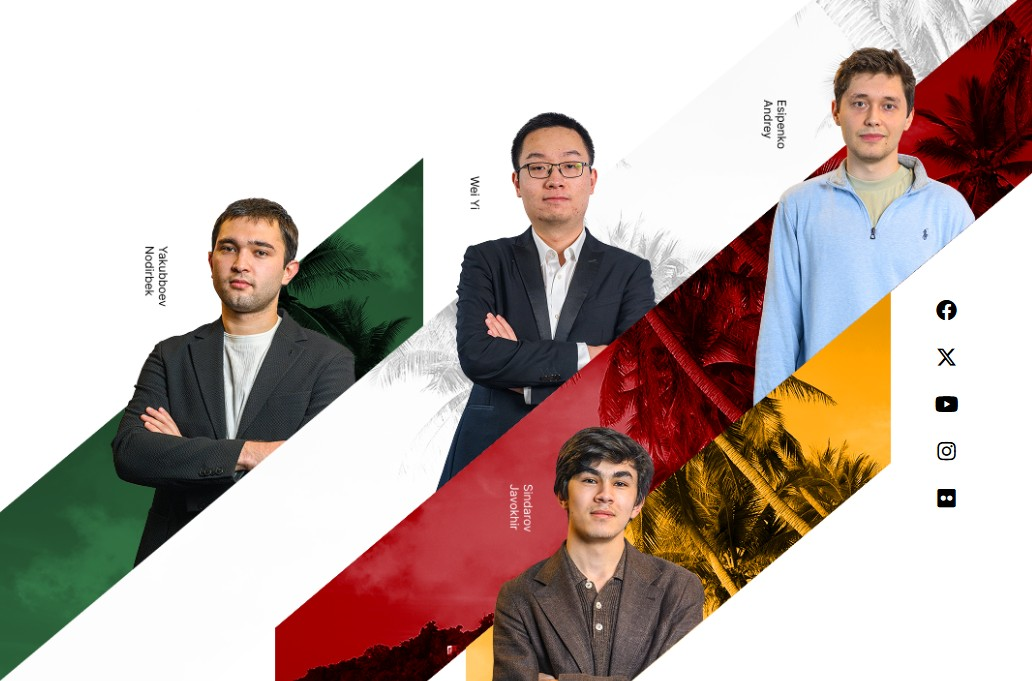
- Wei Yi (China) vs. Andrey Esipenko (Russia)
- Javokhir Sindarov (Uzbekistan) vs. [Fourth semifinalist from remaining bracket]
Updates confirm:
- Wei Yi advanced
- Sindarov advanced
- Esipenko advanced
- The fourth quarterfinal survivor was between Donchenko and others, but the key takeaway:
All semifinalists are first-time Candidates qualifiers.
No Carlsen.
No Caruana.
No old guard dominating.
This is a generational shift.
Why This World Cup Is Special
The knockout format reveals everything — strength, weaknesses, nerves, stamina. This year we’ve seen:
- Gorgeous attacks (Martinez’s sacrifices)
- Endgame masterclasses (Shankland)
- Heartbreaking blunders under pressure
- Tons of matches decided in tiebreaks
India’s hosting in Goa has been a massive success. Even without an Indian semifinalist, the event drew huge crowds and global attention. And with Praggnanandhaa likely qualifying through the Circuit, India still has a strong Candidates presence coming.
Looking Ahead
As we gear up for the semifinals on November 21, followed by the finals and third-place playoff on November 26–27, the big questions remain:
- Who will claim those coveted Candidates spots?
- Will Wei Yi finally break through as a world-title challenger?
- Can Sindarov or other Uzbeks usher in a new chess era?
Stay tuned — I’ll be breaking down key games, turning points, and lessons you can apply to your own chess.
What’s your favorite upset so far? Drop a comment below!
Check out the official site for live games and pairings.
Chess on, friends! ♔
Link to the Official FIDE World Cup 2025 page
Our Summer Chess Camps are the best!
We have daily Online Group Lessons for all players of all skill levels!
Our Monthly Chess Tournaments are great for testing your skills!
Get a School Chess Program today!
Join the official Summit School of Chess Club (on Chess.com)