
USCF Ratings – what are they?
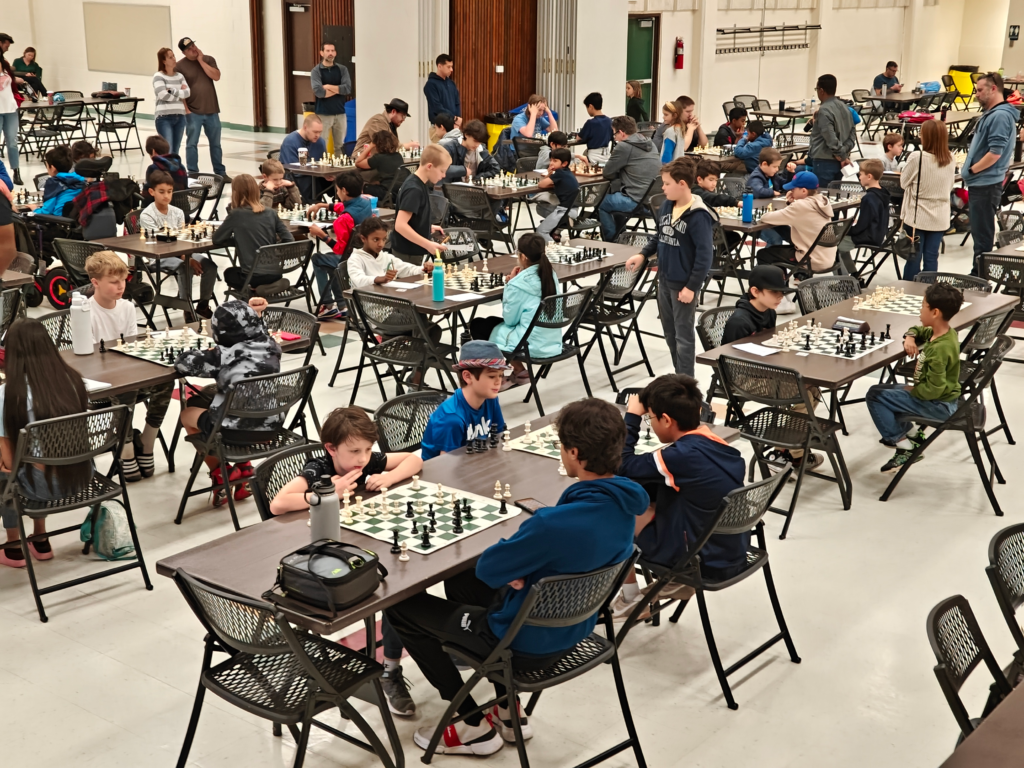
If your child recently played in their first competitive chess event, you likely walked away with a mix of proud moments, partial scores, and a mysterious 3- or 4-digit number assigned to their name.
Understanding how USCF ratings work for kids can feel like trying to decipher a complex scientific code. Parents often ask: Is an 800 rating good? Why did my child lose 60 points in one afternoon? Does drawing against a higher-rated player help or hurt them?
This guide breaks down the United States Chess Federation (USCF) rating system into simple, stress-free terms so you can track your child’s growth, set healthy expectations, and help them navigate competitive play with confidence.
What Is a USCF Rating? (And Why It Matters for Your Child)
A USCF rating is an official numeric score that estimates a player’s relative skill level based on their performance against other rated players. The system is maintained by the United States Chess Federation, the governing body for competitive chess in the country.
The most important thing to remember when reading a scholastic chess rating explained to parents is this: a rating is not a school grade. An “A” student will not automatically start with a 90 or a 900. Ratings range from 100 on the beginner end up to 2400+ for National Masters and International Masters.
In youth chess, the primary purpose of a rating is fairness. Tournament directors use ratings to group players into sections—such as “Under 500” or “Under 1000″—ensuring your child plays against peers with similar experience rather than being paired against high school state champions on day one.
When children work with experienced mentors, like our coaching team at Summit School of Chess
, we use these numbers as diagnostic tools to identify where a student’s tactical vision, opening understanding, or endgame technique needs adjustment.
Unrated vs. Provisional vs. Established: The 25-Game Rule
When your child first enters the USCF ecosystem, their rating goes through distinct phases based on how many official tournament games they have completed.
                      [ Player Progress Pipeline ]
                                   │
      ┌────────────────────────────┼────────────────────────────┐
      ▼                            ▼                            ▼
  Unrated                  Provisional Rating           Established Rating
(0 Games Logged)            (Games 1 through 25)           (26+ Games Logged)
• Assigned initial entry   • Wild rating swings         • Incremental rating changes
• Placed in unrated or     • Uses special formula       • Standardized K-factor formula
  beginner sections          for quick calibration      • Accurate reflection of skill
1. Unrated (0 Games)
Before playing in a rated tournament, your child has no official record. They will enter their first USCF tournament rating events in an “Unrated” or open beginner division.
2. Provisional Rating (Games 1 to 25)
For a player’s first 25 games, the USCF designates their rating as provisional (often denoted on official pairing sheets with a slash or “P”, such as 650/P12, meaning a 650 rating across 12 games).
Because 25 games is a small sample size, the USCF rating algorithm uses a special performance formula that allows for large adjustments. Winning a single game against a strong opponent might raise your child’s rating by 80 to 120 points; losing the next round might drop it by 70.
Parent Tip: Do not panic during the provisional phase! High volatility is built into the math so the system can quickly calibrate where your child truly belongs.
3. Established Rating (26+ Games)
Once a player completes their 26th official game, their rating becomes established. At this point, the mathematical formula shifts to a standard “K-factor” system. Rating changes stabilize into smaller, predictable adjustments—typically 10 to 30 points per game.
How Ratings Change After a Tournament
Ratings do not increase simply because a player won a game; they increase based on who they beat. The rating calculation centers on expectation.
The Power of Opponent Strength
- Beating a Higher-Rated Player: If a child rated 600 beats a player rated 900, the system calculates an “upset.” Your child receives a substantial point boost because they beat the odds.
- Beating a Lower-Rated Player: If that same 600-rated child beats a 200-rated beginner, the system expected that outcome. Your child will gain points, but only a small amount (often 2 to 6 points).
- Draws Count: Drawing against a player rated 300 points above your child yields a positive rating gain because your child outperformed statistical expectations.
Published vs. Live Ratings
The USCF processes tournament reports continuously, generating a “Live Rating” within days of an event finishing. However, tournament section eligibility relies on your child’s Published Rating, which updates on the 1st day of every month. If your child crosses a rating threshold mid-month, they can usually finish out existing tournament registrations at their published rating for that month.
Scholastic Rating Scale: What Is a “Good” Rating for Kids?
Parents naturally want a benchmark to contextualize their child’s numerical progress. Use this scholastic chess rating scale as a practical guide for youth players:
| USCF Rating Range | Player Skill Tier | Typical Scholastic Context |
| 100 – 499 | Beginner | First 1–2 tournaments; learning piece safety, basic tactics, and legal move rules. |
| 500 – 899 | Intermediate Scholastic | 1+ years of experience; winning school club games; understanding basic checkmate patterns. |
| 900 – 1199 | Advanced Scholastic | Consistent tournament competitor; calculated tactical play; placing in local events. |
| 1200 – 1499 | Strong Junior Competitor | Top regional contender; deep opening knowledge and endgame technique; studying with coaches. |
| 1500+ | Elite Scholastic | State champion contender; competing nationally; mastering long-term positional strategy. |
What Are USCF “Rating Floors”?
As players advance, the USCF builds in safety nets known as rating floors.
Once a player’s established rating reaches 1200, the system prevents their rating from dropping below 1000 (200 points below the milestone tier). Higher milestones (1400, 1600, 1800) create higher permanent floors.
Rating floors serve two key functions:
- They protect players from dramatic drops during prolonged slumps or periods away from the board.
- They prevent higher-level players from intentionally lowering their ratings (“sandbagging”) to win lower-tier prize sections.
How Parents Can Support Rating Growth Without the Stress
The most helpful thing a parent can do is insulate their child from rating anxiety. When children focus on the number next to their name rather than the board in front of them, performance drops and stress rises.
- Praise Decision-Making, Not Numbers: Celebrate when your child takes their time, writes down their notation, or finds a brilliant tactical sequence—regardless of whether the final game was a win or a loss.
- Normalize Rating Swings: Remind your child that every grandmaster in history lost thousands of games and experienced rating dips on their way to the top.
- Review Games Systematically: Treat losses as free lessons. Sitting down with a notebook or a coach to review notation sheets converts a lost rating point into permanent skill growth. Read our post on What to Do After Your Child’s First Chess Tournament: A Parent’s 7-Step Review Plan for a step-by-step breakdown.
Put Theory Into Practice: Rated Tournaments in Colorado
Understanding how ratings work is the first step; taking the board is where the true growth happens. Regular tournament exposure gives young players the real-world practice needed to stabilize their ratings and build emotional resilience under game clocks.
Summit School of Chess hosts regular USCF-rated and unrated youth events at the Jefferson County Fairgrounds in Golden, Colorado, featuring clear section divisions for every skill level.
- Ready to give your child tournament experience? Check our upcoming event schedule on the Summit Chess Tournaments Page.
- Looking to raise your child’s rating before their next competition? Explore our Online Chess Training or sign up for School Programs to build a solid tactical foundation.
Our Summer Chess Camps are the best!
We have daily Online Group Lessons for all players of all skill levels!
Our Monthly Chess Tournaments are great for testing your skills!
Get a School Chess Program today!
Join the official Summit School of Chess Club (on Chess.com)